Travel guide · Routes
West Coast to Hawaii on Points: The Best Ways to Fly — and When to Just Pay Cash

By The Beyond Points Team · Published 2026-08-01 · Last verified 2026-08-31
The short answer: The West Coast to Hawaii is the easiest premium-leisure trip to reach in the US — a short ~5–6 hour hop with dozens of nonstops from Los Angeles, San Francisco, Seattle, and more, on Hawaiian, Alaska, United, American, Delta, and Southwest. Economy runs ~20,000–30,000 points one-way and lie-flat/recliner "first" ~40,000–70,000. But here's the honest part most guides skip: because the market is so competitive, cash fares are often low enough that points lose — Hawaii is the clearest route where paying cash and keeping your miles is frequently the smarter move. Compare both every time.
Here's how to decide.
The airlines that fly the West Coast → Hawaii nonstop
Almost every West Coast city has nonstops to the main Hawaiian islands — Honolulu (HNL, Oahu), Kahului (OGG, Maui), Kona (KOA, Big Island), and Lihue (LIH, Kauai):
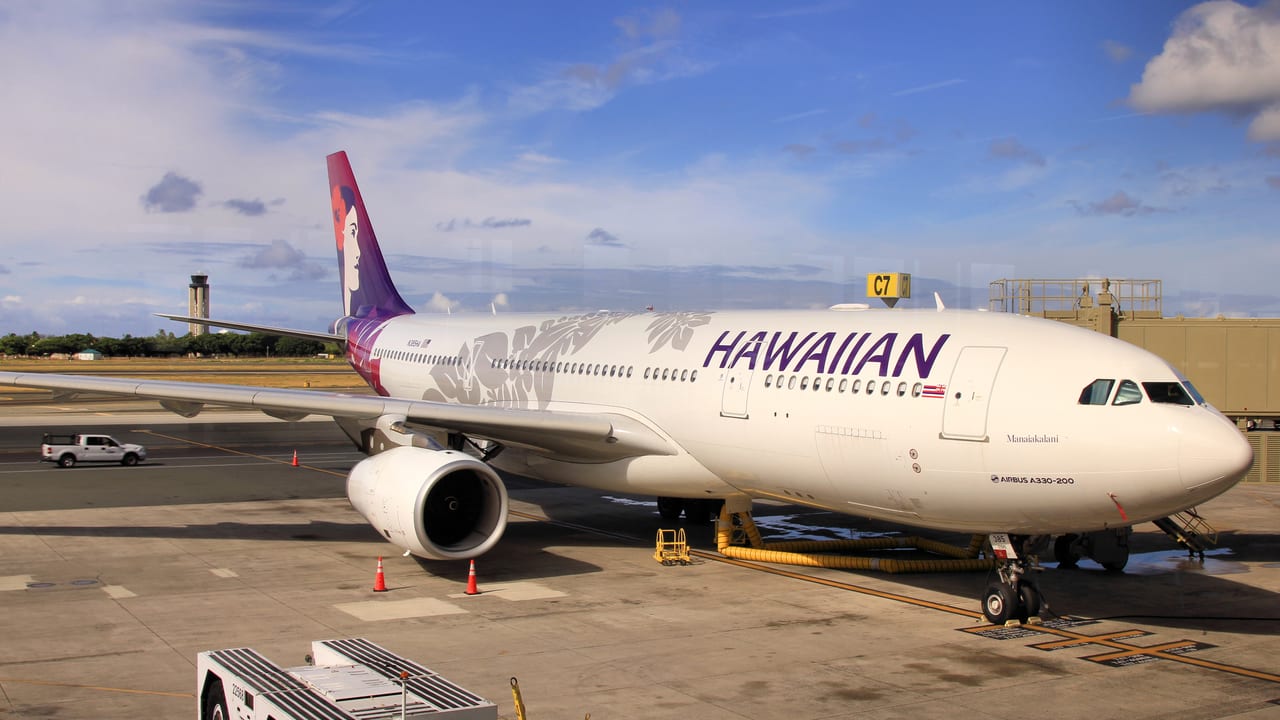

- Hawaiian Airlines — the widest island coverage from the West Coast, with lie-flat first on its A330s. Now part of Alaska (see below).
- Alaska Airlines — extensive West Coast–Hawaii flying and a strong loyalty program; the two carriers are combining.
- United — the most nonstops of the big three, with lie-flat premium on some widebody rotations.
- American — nonstops from LAX and Phoenix, plus partner options.
- Delta — West Coast nonstops with lie-flat Delta One on select flights.
- Southwest — a genuine value player: cash-priced Rapid Rewards points, no change fees, and frequent sales.
Because Hawaii is a domestic route, there's no true international business class — the premium cabin is a domestic first (recliner) or, on widebody rotations, a lie-flat. If alliances are new to you, our guide to how airline alliances work explains which program books which airline.
The best loyalty programs for this route
Point costs are typical, one-way in economy unless noted — confirm live before transferring. Read the cash-vs-points section next, because on this route it decides the booking more often than the mileage price.
| Program | Books | ~Economy | ~First / lie-flat | Transfer partners | Notes |
|---|---|---|---|---|---|
| Alaska Mileage Plan | Alaska, Hawaiian, American | ~20,000–30,000 | ~40,000–55,000 | Bilt, Marriott | Now covers both Alaska & Hawaiian; the most flexible single program |
| United MileagePlus | United | ~22,000–35,000 (dynamic) | ~45,000–70,000 | Chase, Bilt | Most nonstops; dynamic pricing swings with cash |
| American AAdvantage | American, Alaska | ~22,500–30,000 | ~40,000–60,000 | Citi, Marriott | Web specials appear; watch for off-peak |
| Southwest Rapid Rewards | Southwest | cash-priced (~$ ÷ ~1.3–1.4¢) | — | Chase | No change fees; Companion Pass shines; economy-only |
| Delta SkyMiles | Delta | ~25,000+ (dynamic) | ~50,000–90,000 (dynamic) | Amex | Easy to book; usually poor value — often better in cash |
| HawaiianMiles | Hawaiian | ~20,000+ | ~40,000+ | (merging into Alaska) | Being folded into Alaska Mileage Plan — confirm current terms |
On the Alaska–Hawaiian merger: Alaska acquired Hawaiian, and the two loyalty programs have now combined into Atmos Rewards (HawaiianMiles and Alaska Mileage Plan balances converted 1:1), while Hawaiian joined the oneworld alliance — so American, BA Avios, and Japan Airlines can book its flights too. Because the combined program is new, confirm current earning ratios and award prices before you commit. For the full picture, see how to fly Hawaiian Airlines on points.
Cash vs. points — the Hawaii rule
This is the section that matters most, because Hawaii is the route where points most often lose to cash. The West Coast–Hawaii market is fiercely competitive — five legacy carriers plus Southwest — so fares are frequently low.
- Economy: usually compare, and often pay cash. When a round-trip fare is $250–$400, spending ~40,000–60,000 miles round-trip is poor value — that's often under 1 cent per point. Pay cash and keep the miles for an international business seat where they return 4–8×.
- Points win for peak dates and last minute. Over the winter holidays, spring break, and summer, cash fares spike and award seats (especially on Alaska/Hawaiian and Southwest) become the better deal.
- Premium cabin: usually points. A lie-flat or first fare of $800–$1,500+ each way is where ~40,000–70,000 miles earns its keep — if the comfort matters to you on a daytime flight.
- Southwest is a cash-value hybrid. Its points are priced off cash, so they track fares — great with a Companion Pass, and its no-change-fee flexibility is real value.
The honest rule for Hawaii: check the cash fare first. The full framework is in points vs. cash for flights — and it points to cash here more often than on almost any other route.
Which island — and getting between them
- Fly nonstop to your main island. All four major islands have West Coast nonstops; there's rarely a need to route through Honolulu and backtrack.
- Neighbor-island hops are cheap in cash. Inter-island flights (Hawaiian, Southwest) run short and inexpensive — usually not worth points.
- Consider an open jaw. Fly into Maui (OGG) and home from Honolulu (HNL), or vice versa, to see two islands without doubling back.


Best time to book
- Value seasons (late spring, early fall) — the sweet spot: lower fares, easier award space, great weather. Book a couple of months out.
- Peak (mid-December–early January, summer, spring break) — fares and demand spike; this is when points beat cash, so book award space early.
- Whale season (December–April) — a Maui and Big Island highlight; popular, so plan ahead.
- Last-minute — award space on Alaska/Hawaiian and Southwest can appear close-in when cash fares are already high; worth a look.
Common mistakes
- Burning miles when cash is cheap. The classic Hawaii mistake — spending 40,000+ points on a trip you could buy for $300. Always compare first.
- Overlooking Southwest. Its cash-priced points, free changes, and Companion Pass make it one of the best value plays to Hawaii.
- Assuming a lie-flat. Premium cabin is often a domestic recliner; lie-flat appears only on some widebody rotations — check the aircraft.
- Routing through Honolulu unnecessarily. Fly nonstop to your island; don't add a connection you don't need.
- Transferring points before confirming the seat. Confirm availability first — transfers are one-way and permanent. Pair with a transfer bonus only once space is locked.
How Beyond Points helps
Hawaii is the route where the strategist earns its keep by telling you not to use points. The best deal could be a ~$300 cash fare, a Southwest booking with a Companion Pass, an Alaska award on the newly combined program, or a lie-flat United redemption over the holidays — and the answer flips with your dates.
Beyond Points weighs these programs and your transferable points against live cash prices, then recommends the smartest way to reach Hawaii on your dates — including, honestly, when to keep your miles and just pay.
Conclusion
The West Coast to Hawaii is the most accessible island trip in the country — dozens of nonstops, a short flight, and award prices as low as ~20,000 points one-way. But it's also the route where cash wins most often, so check the fare before you spend a mile: pay cash on cheap economy, use points for peak dates and premium cabins, and lean on Alaska's newly combined program for flexibility. To plan the rest, see Hawaii on points and the best time to visit Hawaii.
Frequently asked questions
How many points do you need to fly the West Coast to Hawaii?
Economy typically runs ~20,000–30,000 points one-way; a domestic first or lie-flat seat ~40,000–70,000. But cash fares are often low enough that points are poor value in economy — always compare before transferring.
Is it better to use points or cash to fly to Hawaii?
Often cash. The West Coast–Hawaii market is very competitive, so economy fares are frequently $250–$400 round-trip — poor value against 40,000+ miles. Save points for peak dates, last-minute trips, and premium cabins, where they shine.
What's the best program for West Coast–Hawaii flights?
Alaska Mileage Plan is the most flexible — it now covers both Alaska and Hawaiian after the merger. United has the most nonstops (dynamic pricing), and Southwest is a strong cash-value play with free changes and the Companion Pass. Compare against the cash fare each time.
How is the Alaska–Hawaiian merger changing Hawaii awards?
Alaska acquired Hawaiian and the two loyalty programs have combined into Atmos Rewards, with HawaiianMiles and Alaska Mileage Plan balances converted 1:1. Hawaiian also joined oneworld, so American, BA Avios, and JAL can book its flights. The program is new, so confirm current earning ratios and award prices before you book.
Can I use Amex or Chase points to fly to Hawaii?
Yes, indirectly. Chase transfers to United and Southwest; Amex to Delta; and both feed Marriott, which reaches Alaska and American. (Citi is the one bank currency that transfers to American directly.) The best choice depends on your dates — and whether cash is simply cheaper.
Which Hawaiian island should I fly into?
Fly nonstop to your main island — Honolulu (Oahu), Kahului (Maui), Kona (Big Island), or Lihue (Kauai) all have West Coast nonstops. Consider an open-jaw (in to one island, home from another) to see two without backtracking; inter-island hops are cheap in cash.