Travel guide · Best Time to Visit
Best Time to Visit Hawaii: Weather, Crowds, Whales, and Points Value by Season

By The Beyond Points Team · Published 2026-07-04 · Last verified 2026-07-26
The short answer: Hawaii is a year-round destination — warm always, with highs in the low-to-mid 80s°F — so the real question is value and crowds, not whether the weather will cooperate. The shoulder seasons — April–May and September to early December — are the sweet spot: great weather, lower prices, and the best hotel award availability. The priciest, busiest windows are the winter holidays through March (also whale season) and summer (June–August). For points travelers, timing mostly affects the hotel: dynamic programs spike hard at peak, so lean on fixed-chart Hyatt or shift to shoulder months. Flights often favor cash regardless of season — Hawaii on points explains that inversion.
Hawaii month by month
Hawaii has two loose seasons: summer (roughly May–October), drier and calmer, and winter (November–April), wetter with bigger north-shore surf and whales offshore. The table is a typical pattern — leeward (south/west) coasts are always drier than windward (north/east) ones. Confirm current conditions.
| Months | Weather | Crowds & price | Highlight | Points angle |
|---|---|---|---|---|
| January–March | Cooler, wetter; big north surf | Peak (winter escape) | Whale season peak; pro surf | Dynamic hotels spike — lean on Hyatt or pay cash |
| April–May | Warming, drying out | Shoulder — great value | Shoulder calm, lower rates | Best mix of weather + award space |
| June–August | Warm, dry, calm seas | Peak (family summer) | Best snorkeling/beach conditions | Book hotels early; compare cash flights |
| September–early Dec | Warm, dry, settled | Shoulder — best value | Fewest crowds, lowest rates | Sweet spot for points hotels |
| Mid-Dec–early Jan | Cooler, variable | Holiday peak (priciest) | Festive, whale season begins | Award nights scarce and pricey — book far ahead |
The takeaway: weather is reliably good most of the year, so let crowds and price drive the timing. The shoulder windows deliver nearly identical beach weather to peak season at a meaningful discount.
The best months to aim for
- Late April–May — post-spring-break calm, warm and drying, strong value before the summer rush.
- September–early December — arguably the best overall: settled weather, the thinnest crowds, and the lowest rates and easiest award space of the year.
- June–August — peak beach conditions and calm seas, but book hotels early; it's family-travel high season.
- January–March — go for whales and surf, not value; it's peak demand, and dynamic hotel points prices climb.
What each season is good for
- Whale season (mid-December–April, peak Jan–March) — humpbacks gather off the islands, best seen from Maui. A genuine reason to accept winter's higher prices.
- Big-wave surf (November–February) — Oahu's North Shore hosts world-class swells and competitions; spectacular to watch, not to swim.
- Snorkeling & calm seas (May–September) — the clearest water and gentlest conditions for beaches, diving, and boat tours.
- Shoulder calm (April–May, Sep–Nov) — the all-rounder: good weather, fewer people, better prices, and easier award nights.
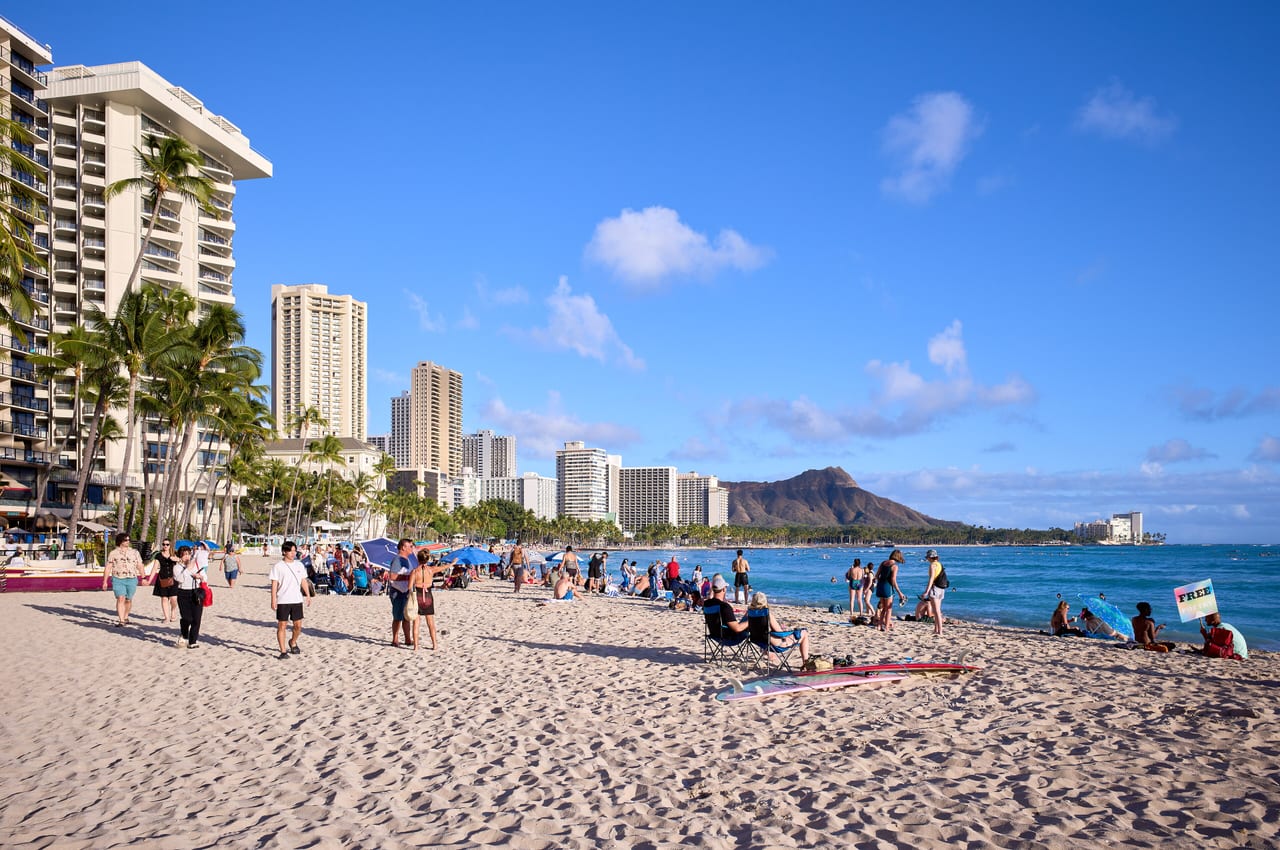

For which island suits your trip — Oahu, Maui, Kauai, or the Big Island — see Hawaii on points.
How the season changes booking on points
Hawaii's season barely touches the flight math but strongly affects the hotel:
- Flights — West Coast fares are often cheap enough that cash beats miles year-round; peak seasons raise cash fares but rarely enough to flip the math. Alaska Mileage Plan is the standout program if you do redeem. Book peak dates (summer, holidays) early either way.
- Hotels — this is where the season bites. Dynamic programs (Marriott, Hilton) spike sharply over the holidays and in summer, sometimes doubling the points a night costs. Fixed-chart Hyatt (Andaz Maui, Grand Hyatt Kauai) holds its price when others surge — the clearest peak-season shield (see World of Hyatt sweet spots).
Cash vs. points by season
- Flights: usually cash, especially from the West Coast, in every season. From the East Coast, a premium-cabin award can win on the long haul — compare.
- Hotels: usually points, and most valuable at peak when cash rates are highest — provided you use a fixed-chart or well-priced award rather than an inflated dynamic one.
Peak weeks are exactly when dynamic hotel points can quietly lose value — run the points vs. cash for hotels comparison before committing.
Common mistakes
- Waiting to book peak dates. Summer and holiday resort awards — and cheap flights — sell out months ahead.
- Assuming winter is a washout. It's slightly wetter with bigger surf, but still warm; whale season is a real winter draw.
- Overpaying with dynamic hotel points at peak. When Marriott/Hilton spike, a fixed-chart Hyatt night is often the smarter redemption.
- Burning miles on a cheap flight. Season rarely makes a West Coast fare worth 40,000 miles — check the cash price first.
- Transferring before confirming availability. Confirm the room and seat first — transfers are one-way and permanent.
How Beyond Points helps
Hawaii's timing question is really a value question, and it lands almost entirely on the hotel: whether a peak award still beats cash, whether a fixed-chart Hyatt undercuts a surging dynamic program, and whether shifting to a shoulder week opens space. Meanwhile the flight usually favors cash — the opposite of most beach destinations.
Beyond Points weighs hotel award nights against cash rates and packages, and airline programs against live fares, for your exact Hawaii dates — then recommends the season and the booking that give you the most trip for the least.
Conclusion
Hawaii is good year-round, so time your trip for value: the April–May and September–early December shoulders deliver peak-quality weather at off-peak prices and the easiest award nights, while winter brings whales and surf at a premium and summer brings calm seas and crowds. Put points where hotel cash rates are highest — favoring fixed-chart Hyatt at peak — pay cash for cheap flights, and confirm space before you transfer. Time it well and paradise is both a dream and a bargain.
Frequently asked questions
What is the best time to visit Hawaii?
For the best mix of weather, value, and manageable crowds, aim for the shoulder seasons — April to May and September to early December. The weather is nearly as good as peak season, but prices are lower and hotel award availability is much better.
When is the cheapest time to visit Hawaii?
September to early December (before the holidays) is typically the cheapest, with late April to May close behind. The winter holidays through March and the summer months are the priciest and busiest windows.
When is whale season in Hawaii?
Humpback whales are typically off the islands from mid-December through April, peaking January to March, and are best seen from Maui. It's a strong reason to accept winter's higher prices if wildlife is a priority.
Does the season change how many points a Hawaii trip costs?
Mostly on the hotel side. Dynamic programs (Marriott, Hilton) spike over the holidays and in summer, sometimes doubling a night's points, while fixed-chart Hyatt holds steady. Flights are usually better on cash than points regardless of season, especially from the West Coast.
Is winter a bad time to visit Hawaii?
No — it's slightly cooler and wetter with bigger north-shore surf, but still warm and very much beach weather on the leeward coasts. Winter brings whale season and world-class surf; you simply pay peak prices and should book scarce awards well ahead.
How far ahead should I book a peak-season Hawaii trip?
As early as you can. Summer and holiday resort awards and cheap flights sell out months in advance. Lock the hotel first (it's the scarce, high-value piece), and confirm award availability before transferring any points.