Travel guide · Destinations
Italy on Points: How to Fly and Stay Across Rome, Florence, Venice and Beyond
By The Beyond Points Team · Published 2026-06-30 · Last verified 2026-07-26
The short answer: Italy is one of the most flexible points destinations in Europe because it has many gateways — Rome, Milan, Venice, Florence, Naples — and no single airline monopoly, so award space turns up across several programs. Transatlantic business runs ~55,000–75,000 miles one-way (economy ~25,000–35,000), and hotels span every major chain from Venetian palaces to Roman landmarks. The catch is that Italy's internal geography is where trips get expensive or slow: choosing the right entry city (and open-jaw exit) matters more than squeezing the last mile out of a fare. Fly into one city, out of another, and lean on points where the cash rates are highest — Venice and the Amalfi Coast in summer.
At a glance
- Pick your gateway by trip. Rome (FCO) for the south and first-timers, Milan (MXP) for the north and the lakes, Venice (VCE) and Florence (FLR) for regional focus.
- No single dominant airline means award space appears across Flying Blue, Star programs, and Avios — check several.
- ITA Airways is in flux. Currently SkyTeam, but a Lufthansa Group stake may shift its alliance over time — confirm before you plan around it.
- Fly open-jaw. In one city, out another (e.g., Rome in, Venice out) avoids backtracking and is usually the same points cost.
- Hotels: cash is often competitive. Italy's independents and boutiques are superb; use points where chain cash rates spike (peak Venice, Amalfi).
Why Italy is a flexible points destination
Unlike a home-hub city such as Paris, Italy isn't dominated by one carrier, and it spreads demand across several airports. That's good news for award seats: when Rome is full, Milan or Venice may be open, and a one-stop through a European hub often prices well. It also means no single loyalty program "owns" Italy — the best deal genuinely rotates.
The real cost lever in Italy is routing on the ground. The classic mistake is flying round-trip into Rome and doubling back; the fix is an open-jaw — in one city, out of another — with fast trains (Frecciarossa/Italo) linking Rome, Florence, Venice, and Milan in a few hours. Plan the shape of the trip first, then find the points.
Getting to Italy on points
Italy's main long-haul gateways are Rome Fiumicino (FCO) and Milan Malpensa (MXP), with seasonal US nonstops also to Venice (VCE) and Naples (NAP). Figures are typical one-way — confirm live, and prices vary by gateway and season.
| Program | Books | ~Business | ~Economy | Transfers from | Notes |
|---|---|---|---|---|---|
| Flying Blue | Air France, KLM, ITA (SkyTeam) | ~55,000–75,000 | ~25,000–35,000 | Amex, Chase, Citi, Cap One, Bilt | Reachable from any card; one-stop via CDG/AMS or ITA nonstops |
| Aeroplan | Star (United, Lufthansa, Swiss) | 60,000–75,000 by distance band | ~35,000–45,000 | Amex, Chase, Bilt, Cap One | No carrier surcharge (+CAD $39); United nonstops EWR→FCO/MXP/VCE |
| Avianca LifeMiles | Star Alliance | ~63,000 | ~40,000 | Amex, Citi, Cap One, Bilt | No surcharges; glitchy site; via a European hub |
| Iberia Avios | Iberia (via Madrid) | ~40,500+ then a hop | ~25,000 | Amex, Chase, Bilt | Cheap Madrid business, short connection to Rome/Milan |
| ITA / Delta / United (own) | SkyTeam / Star metal | dynamic (often 80,000+) | dynamic | Amex (Delta); Chase (United) | Nonstops, but dynamic pricing — compare with cash |
Practical read: Flying Blue is the accessible default and often the cheapest one-stop; Star programs (Aeroplan, LifeMiles) shine when United flies you nonstop from Newark with no fuel surcharges; and Iberia's Madrid back door is a clever cheap-business option. Because ITA Airways' alliance may change, don't build a plan solely around it — how alliances work explains why the bookable program matters more than the tail. Fund it via Amex or Chase, and confirm space before you transfer. Flying from New York? See New York to Rome on points for the route-by-route breakdown, including a Rome-in / Venice-out open-jaw.
Best Italian hotels you can book on points
Every major program has a deep Italian portfolio, from Venetian palaces to Roman landmarks. Figures are typical per night — confirm live (Marriott, Hilton, and IHG price dynamically, and summer peaks run high).
| Program | Standout properties | ~Points/night | Cash range | Notes |
|---|---|---|---|---|
| Hyatt | Park Hyatt Milan, Hyatt Centric Murano Venice / Rome | ~30,000–45,000 | $500–$1,200 | Best value per point; smaller Italian footprint |
| Marriott | Gritti Palace & Danieli (Venice), St. Regis Rome/Florence, W Rome | ~60,000–110,000 | $700–$2,500+ | Deepest luxury bench; 5th-night-free on awards |
| Hilton | Rome Cavalieri (Waldorf Astoria), Molino Stucky Venice | ~70,000–120,000 | $400–$1,500 | Landmark options; easiest points to amass in bulk |
| IHG | Six Senses Rome, Hotel Indigo Venice/Rome/Florence | ~50,000–90,000 | $400–$1,200 | Growing luxury (Six Senses); watch dynamic peaks |
How to choose: Hyatt is the value pick where it has a property — its fixed chart (see the World of Hyatt guide) shields you from peak spikes. Marriott has the marquee names, especially in Venice, plus 5th-night-free (Marriott guide); Hilton's Rome Cavalieri is a genuine icon (Hilton guide); and IHG's Six Senses Rome is one of Europe's best new luxury redemptions (IHG guide). But Italy's independents are world-class, so compare cash before committing points.
Where to go — and how to route it
- Rome — the essential first trip: the Colosseum, the Vatican, and the best flight connections. Fly into FCO.
- Florence & Tuscany — art and countryside; reach it by train from Rome or fly into FLR (small airport, often via a European hub).
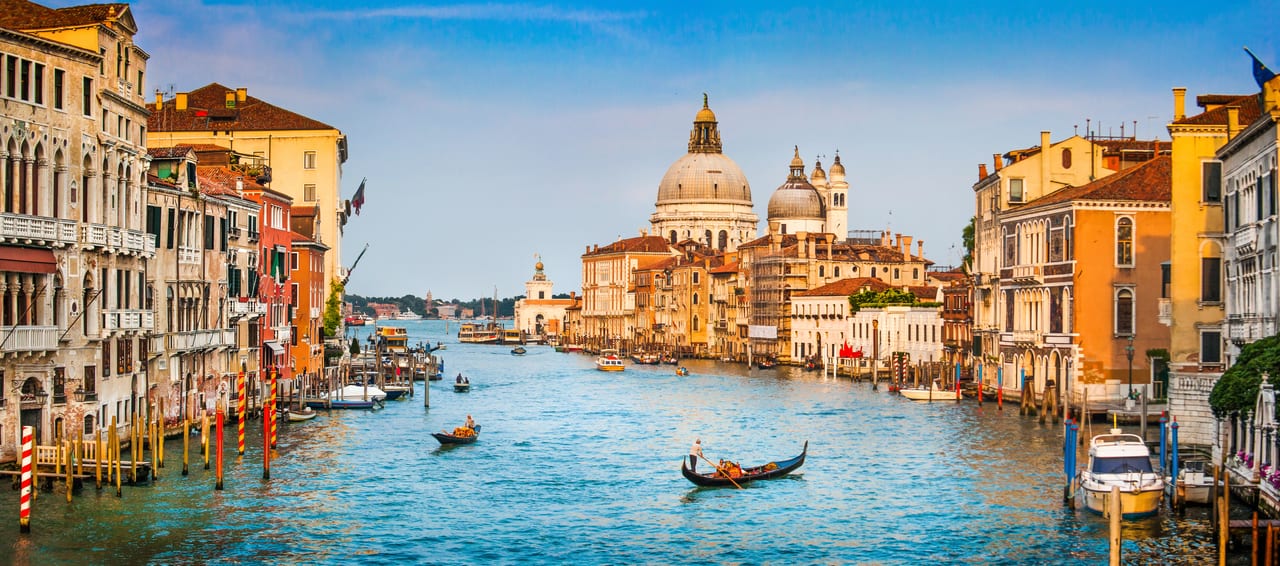
- Venice — unique and pricey; VCE has some US nonstops in summer. A superb open-jaw exit, and the clearest case for spending hotel points.
- Milan & the Lakes — fashion, design, and Lake Como; MXP is the northern gateway.
- Amalfi Coast & the south — via Naples (NAP); stunning but seasonal and expensive in July–August.
- Trains beat backtracking — Frecciarossa/Italo link the big cities in 1.5–4 hours; build an open-jaw and skip the round-trip return leg.

Cash vs. points
- Flights: usually points for business. Cash business runs $2,500–$6,000+ round trip; a ~55,000–75,000-mile redemption is strong value. Economy is a closer call — Italy sees frequent cheap cash fares, so keep the miles if a sale appears.
- Hotels: genuinely compare. Points win at peak (summer Venice/Amalfi) and at high-cash-rate landmarks; Italy's independents often win in shoulder season.
Run the value each time with the points vs. cash framework — in Italy, the answer shifts by city and season.
Best time to visit
The short version is below; for the month-by-month breakdown, regional differences, and festival dates, see best time to visit Italy.
- Spring (April–June) — arguably ideal: warm, blooming, and busy but not yet peak. Book premium space early.
- Summer (July–August) — hot and crowded, with peak cash rates on the coasts; many locals leave the cities in August.
- Fall (September–October) — the sweet spot: harvest season, great weather, easing crowds and prices.
- Winter (November–March) — cheapest fares and best award space outside the holidays; cold in the north, mild in the south, and a quieter Rome and Florence.
Common mistakes
- Flying round-trip into one city. Open-jaw (in Rome, out Venice) saves a backtrack and usually costs the same points.
- Building a plan around ITA Airways' alliance. Its ownership — and possibly its alliance — is changing; confirm current status before you rely on a specific program to book it.
- Defaulting to chain points everywhere. Italy's independents are exceptional and often cheaper than an award night in shoulder season.
- Transferring points before confirming the seat. Confirm availability first — transfers are one-way and permanent.
- Underestimating summer on the coast. Amalfi and Venice in July–August are the priciest, hardest windows; shift to shoulder season or use points where cash spikes hardest.
How Beyond Points helps
Italy's flexibility is exactly what makes it hard to optimize by hand: five gateways, several programs that each price differently by city and date, an airline whose alliance may be shifting, and hotels where cash frequently beats points. The best trip is an open-jaw with the flight booked through whichever program has space and the hotel chosen where points do the most work.
Beyond Points weighs airlines, loyalty programs, transfer partners, and cash across every Italian gateway, then recommends how to shape your Italy trip — including which city to fly into, and why.
Conclusion
Italy rewards flexibility more than loyalty: with many gateways and no dominant airline, award space appears across several programs, and the smartest trips fly open-jaw and lean on points where cash rates are highest. Favor points for business-class flights, compare hotels honestly against Italy's superb independents, travel the shoulder seasons, and confirm the seat before you transfer. Do that and the whole country — Rome to the lakes — opens up for a fraction of the cash price.
Frequently asked questions
Can you visit Italy on points?
Yes, and Italy is unusually flexible because it has several gateways — Rome, Milan, Venice, Florence, Naples — and no single dominant airline, so award space appears across multiple programs. Transatlantic business typically runs 55,000–75,000 miles one-way and economy about 25,000–35,000, with hotels available across every major chain.
Which city should I fly into for Italy?
Rome (FCO) for the south and a first trip, Milan (MXP) for the north and the lakes, and Venice (VCE) or Florence (FLR) for a regional focus. The smartest approach is often an open-jaw — into one city, out of another — with fast trains linking them, which avoids backtracking at no extra points cost.
What's the best program to fly to Italy on points?
There's rarely one answer — that's Italy's strength. Flying Blue is the accessible default and often the cheapest one-stop; Star programs (Aeroplan, Avianca LifeMiles) win on United's no-surcharge Newark nonstops; and Iberia Avios via Madrid is a cheap business back door. Check several for your dates.
Is ITA Airways good for booking Italy on points?
ITA Airways currently belongs to SkyTeam (bookable via Flying Blue or Delta), but a Lufthansa Group ownership stake may eventually shift its alliance. Because that's in flux, don't build a plan solely around ITA — confirm its current alliance and partner access before you rely on a specific program to book it.
Which hotel program is best for Italy?
Hyatt offers the best value where it has a property (Park Hyatt Milan, Hyatt Centric Venice/Rome), while Marriott has the deepest luxury bench — especially the Venetian palaces — plus 5th-night-free. Hilton's Rome Cavalieri and IHG's Six Senses Rome are standouts. Italy's independents are excellent, so compare cash too.
When is the best time to visit Italy?
Spring (April–June) and fall (September–October) are ideal for weather, value, and manageable crowds. Summer is hot, crowded, and priciest on the coasts, while winter offers the cheapest fares and best award space outside the holidays.