Travel guide · Airline Programs
Best Business Class Flights You Can Book for Under 60,000 Points
By The Beyond Points Team · Published 2026-05-25 · Last verified 2026-08-31
The short answer: Yes — flying business class for under 60,000 points one-way is realistic, and there are more good options than most people think. The best deals depend on your route, which airline flies it, the loyalty program you book through, whether you have the right transfer partners, and — above all — whether award space is actually open. The programs below consistently price lie-flat business seats well under 60,000 points. The key is knowing that the cheapest award and the best award are often two different things.
Here's how to find both.
What makes a great business-class redemption?
Point cost is the headline, but it's only one of six things that decide whether a redemption is actually good:
- Points required — the obvious one, but never the whole story.
- Taxes, fees, and fuel surcharges — this is where "cheap" awards go to die. Some programs add several hundred dollars in carrier surcharges on the exact same flight another program books for $50 in taxes.
- Cabin quality — a 45,000-point seat in a dated angled-flat cabin can be a worse experience than a 58,000-point true lie-flat suite.
- Transfer partners — an award is only reachable if you can get points into that program. The most flexible currencies (Amex, Chase, Capital One, Citi, Bilt) reach some programs and not others.
- Ease of finding award space — a phenomenal price you can never book is worth nothing.
- Overall value — all of the above, weighed against what the seat would cost in cash.
That's why "lowest points wins" is the wrong instinct. A 40,500-point Iberia business seat with $200 in taxes is a genuine steal. A 60,000-point British Airways seat on the same ocean with $900 in surcharges is barely better than paying cash. The number that matters is total cost for the seat you actually get — the same logic behind points vs. cash.
The best business-class sweet spots
These are among the most reliable sub-60k business redemptions available today. Point costs are typical one-ways unless noted — always confirm live pricing and availability before transferring.
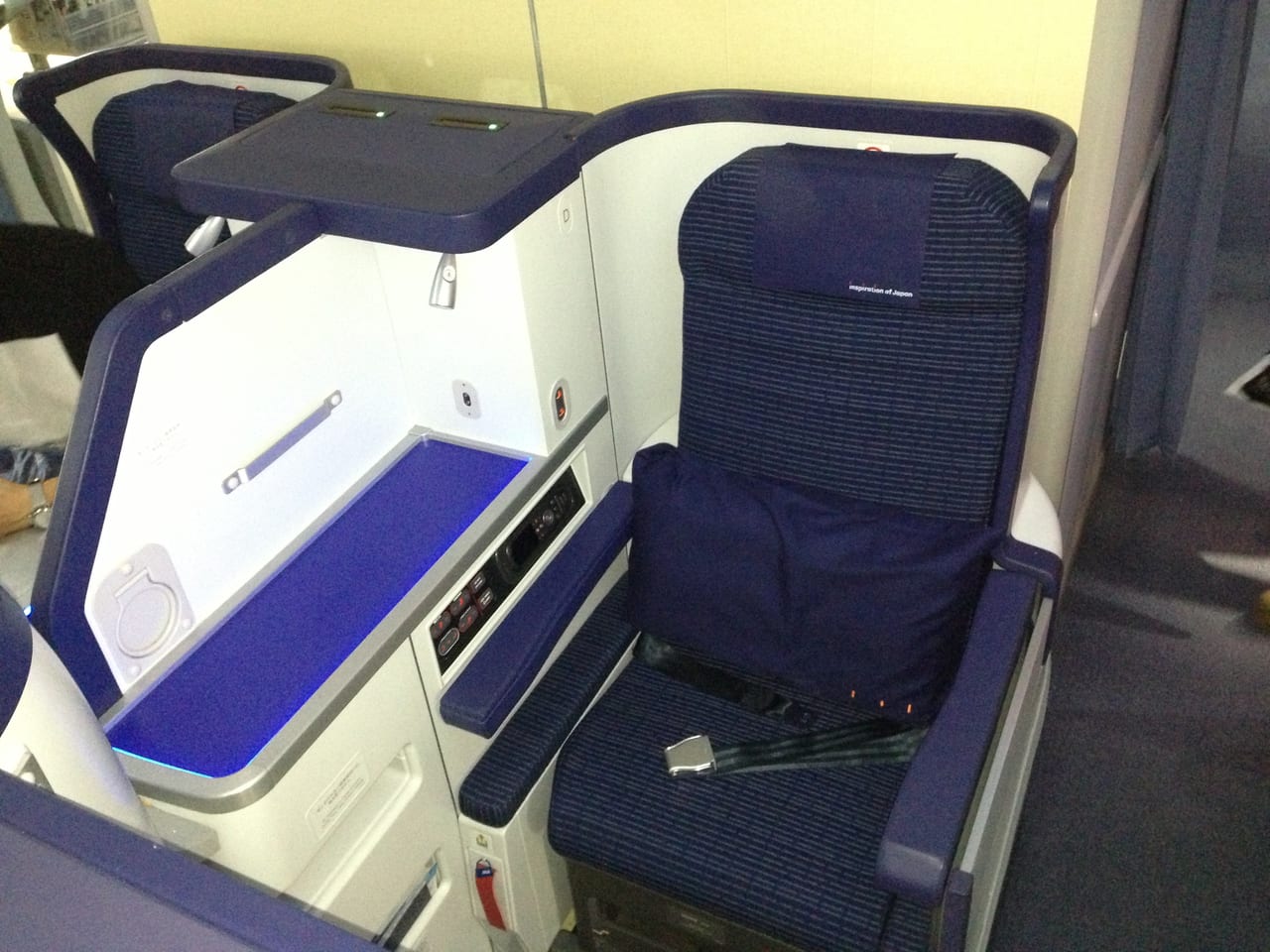

1. Iberia — US East Coast ⇄ Madrid
- Typical cost: ~40,500 Avios one-way (off-peak) · Cabin: Iberia lie-flat business
- Transfer partners: Amex, Chase, Capital One, Bilt, Citi, Marriott (all reach Avios)
- Why it's great: The single cheapest lie-flat way across the Atlantic. On off-peak dates, this is close to unbeatable value.
- Things to know: Only off-peak calendar dates get the 34k price; peak dates cost more. Book on Iberia's site (Avios is shared across Iberia, British Airways, Aer Lingus, and Qatar).
- Difficulty: Easy–Moderate
2. Air France / KLM (Flying Blue) — US ⇄ Europe
- Typical cost: ~50,000–53,000 miles one-way (monthly Promo Rewards can dip lower) · Cabin: Air France/KLM business
- Transfer partners: Amex, Chase, Citi, Capital One, Bilt — the most flexible currency in the game
- Why it's great: Reachable from nearly every points balance, and Flying Blue's monthly promos regularly discount transatlantic business. See Flying Blue sweet spots.
- Things to know: Surcharges are moderate and vary by route. Great pairing with a transfer bonus.
- Difficulty: Easy
3. Air Canada (Aeroplan) — US ⇄ Europe
- Typical cost: ~55,000–60,000 points one-way (distance-banded; East Coast departures land lower) · Cabin: Star Alliance partner business (Lufthansa, Swiss, Brussels, TAP, etc.)
- Transfer partners: Amex, Chase, Bilt, Capital One, Marriott
- Why it's great: Access to the enormous Star Alliance network through one flexible program, with distance-based pricing that rewards shorter hops.
- Things to know: Some partners (notably Lufthansa) pass on fuel surcharges; others don't. Aeroplan's stopover option adds serious value on longer trips.
- Difficulty: Moderate
4. Turkish Airlines (Miles&Smiles) — US ⇄ Europe
- Typical cost: ~45,000 miles one-way · Cabin: Star Alliance partner business (United, Lufthansa, Turkish)
- Transfer partners: Citi, Capital One, Bilt, Marriott (not Amex or Chase)
- Why it's great: One of the lowest published prices for transatlantic business, period.
- Things to know: Booking is the catch — Turkish's site is glitchy and you often have to call to ticket partner awards. Great value if you have the patience.
- Difficulty: Hard (pricing is excellent, process is painful)
5. Virgin Atlantic (Flying Club) — US ⇄ Europe on Delta One
- Typical cost: ~50,000 points one-way · Cabin: Delta One lie-flat
- Transfer partners: Amex, Chase, Citi, Capital One, Bilt — every major currency
- Why it's great: A widely accessible way into lie-flat transatlantic business, bookable from any flexible balance.
- Things to know: Book Delta metal, not Virgin's own — Virgin's London flights carry steep surcharges. On Delta-operated flights, fees stay reasonable.
- Difficulty: Easy–Moderate
6. ANA Mileage Club — US ⇄ Japan
- Typical cost: ~85,000–90,000 miles round trip (≈45k each way) · Cabin: ANA business ("The Room" on the 777 is a standout)
- Transfer partners: Amex, Marriott
- Why it's great: A world-class product with low surcharges and genuinely good award availability — one of the best premium experiences on this list.
- Things to know: Once priced round-trip only, but one-ways have been permitted since June 2025 at half the round trip. Plan both directions together. Book well ahead for peak seasons.
- Difficulty: Moderate
7. Alaska Mileage Plan — US ⇄ Japan on Japan Airlines
- Typical cost: ~60,000 miles one-way · Cabin: JAL business (excellent)
- Transfer partners: Bilt, Marriott (Alaska isn't an Amex/Chase/Capital One partner, so miles are harder to amass)
- Why it's great: Superb JAL hard product, and Alaska allows a free stopover on one-way awards — turn a flight to Tokyo into two cities.
- Things to know: Sits right at the 60k line. The constraint is earning Alaska miles, not the price.
- Difficulty: Moderate
8. Avianca LifeMiles — US ⇄ Latin America (and Europe)
- Typical cost: ~55,000 miles one-way to Latin America (Europe often ~63k, just above) · Cabin: Star Alliance partner business
- Transfer partners: Amex, Citi, Capital One, Bilt, Marriott
- Why it's great: No fuel surcharges, ever — which can make it the cheapest total cost even when the point price isn't the lowest. LifeMiles also runs frequent buy-miles sales.
- Things to know: The website can be buggy mid-booking; have patience and don't re-transfer in a panic.
- Difficulty: Moderate
9. American AAdvantage — US ⇄ Europe (reduced awards)
- Typical cost: ~57,500 miles one-way when reduced "web special" business fares appear · Cabin: AA, British Airways, Finnair, or Iberia business
- Transfer partners: Citi (1:1 from premium cards), Marriott (not Amex/Chase — miles otherwise come from AA cards)
- Why it's great: When AA drops a reduced business award, it undercuts the standard rate meaningfully.
- Things to know: These fares are dynamic and come and go; you have to be watching. Avoid routings that add BA surcharges.
- Difficulty: Hard
10. Air Canada (Aeroplan) — Short-haul & US ⇄ Caribbean business
- Typical cost: ~25,000–35,000 points one-way (short distance bands) · Cabin: partner business
- Transfer partners: Amex, Chase, Bilt, Capital One, Marriott
- Why it's great: Aeroplan's distance-based chart makes shorter business-class hops remarkably cheap — an easy, high-value first redemption.
- Things to know: Value scales with distance bands, so map your route to the band before booking.
- Difficulty: Easy–Moderate
11. Qatar Airways (Avios) — US ⇄ Doha, Qsuite (the aspirational stretch)
- Typical cost: often above 60k one-way, but worth knowing · Cabin: Qsuite, widely considered the best business class flying
- Transfer partners: Amex, Chase, Capital One, Bilt, Citi (via Avios)
- Why it's here: When Qatar releases promotional Avios pricing or you catch a transfer bonus, Qsuite can edge into reach. If your goal is the best seat rather than the fewest points, keep this on your radar.
- Difficulty: Moderate–Hard
Which programs offer the best value?
There's no single "best" program — each trades something off. Understanding the personalities matters more than a ranking, and it helps to know how airline alliances work so you know which carriers each program can book.


- Flying Blue (Air France/KLM) — Most accessible. Transfers from everything, runs monthly promos, solid European coverage. Weakness: moderate, variable surcharges.
- Aeroplan (Air Canada) — Best all-rounder for Star Alliance. Distance-based pricing, broad transfer access, useful stopovers. Weakness: surcharges on a few partners.
- Virgin Atlantic — Best for booking Delta One and (when available) ANA. Reachable from every currency. Weakness: high surcharges on Virgin's own metal.
- Alaska Mileage Plan — Best premium partners (JAL, Cathay, Qatar) and free one-way stopovers. Weakness: hard to earn — no major flexible transfer partner beyond Bilt.
- Avianca LifeMiles — Best for total cost, thanks to no fuel surcharges, plus cheap buy-miles sales. Weakness: a temperamental website.
- Turkish Miles&Smiles — Best headline prices to Europe and on United domestically. Weakness: real booking friction.
- British Airways Executive Club (Avios) — Best for short-haul hops and off-peak Iberia deals, not long-haul on BA metal (where surcharges balloon). Use Avios where the surcharges are low, and it shines.
Because Avios and Flying Blue are reachable from Amex, understanding your Amex transfer partners is often the fastest way to unlock several of these at once.
Common mistakes
- Focusing only on point cost. The lowest number can hide the highest fees. Compare total cost — points plus cash — every time.
- Ignoring taxes and fuel surcharges. A 60k award with $900 in surcharges loses to a 58k award with $80. Always check the out-of-pocket before you're impressed by the miles.
- Transferring before you've found availability. Confirm the seat first. Transfers are one-way and permanent — chasing an award that isn't there strands your points.
- Overlooking partner bookings. The cheapest way to fly Lufthansa or JAL usually isn't through Lufthansa or JAL — it's through Aeroplan, Avianca, or Alaska. The operating airline and the booking program are two separate choices.
- Assuming dynamic pricing is always bad. Programs like United and Flying Blue price dynamically, which sometimes means lower than a fixed chart. Don't dismiss a search just because there's no published sweet spot.
How Beyond Points helps
The reason these sweet spots are hard to act on is that they live in a dozen different programs, each with its own pricing, surcharges, transfer partners, and availability. Checking them one by one is slow, and it's easy to fixate on a great headline price that turns out to carry heavy fees or no open seats.
Beyond Points weighs those loyalty programs against each other and against live cash prices, then recommends the strongest overall redemption for your actual dates — not just the one with the fewest points. It's built to catch exactly the tradeoffs this article is about: the cheap award with big surcharges, the pricier award that's actually the better deal, and the seat that's genuinely open.
Conclusion
Business class under 60,000 points is well within reach — Iberia to Madrid, Flying Blue and Aeroplan across the Atlantic, ANA and JAL to Japan, LatAm on surcharge-free LifeMiles. But the goal isn't to book the award with the smallest number. It's to book the one with the greatest overall value: the right cabin, low fees, points you can actually reach, and a seat that's really available. Learn to weigh all of that, and you'll consistently fly up front for a fraction of the cash price.
Frequently asked questions
Can you really fly business class for under 60,000 points?
Yes. Iberia to Madrid runs about 40,500 Avios off-peak, Turkish prices US–Europe business around 45,000 miles, and Flying Blue and Virgin Atlantic regularly come in around 50,000 — all in lie-flat business, one-way, when award space is open.
What is the cheapest business class redemption to Europe?
Iberia's off-peak business award from the US East Coast to Madrid (~40,500 Avios) is typically the cheapest lie-flat option across the Atlantic. Turkish (~45,000 miles) is the lowest across broader European destinations.
Which points transfer to the most business-class programs?
American Express and Capital One reach the widest set, including Flying Blue, Avios, Virgin Atlantic, Aeroplan, and Avianca LifeMiles. Chase reaches Flying Blue, Aeroplan, Virgin Atlantic, and Avios. Alaska and American are hardest to earn via transfer.
Why are some cheap awards a bad deal?
Because point cost ignores fuel surcharges. Some programs add several hundred dollars each way in carrier-imposed fees on the same flight another program books for under $100. Always compare the total points-plus-cash cost.
Is it better to book the operating airline or a partner program?
Often a partner. The cheapest way to fly airlines like Lufthansa or Japan Airlines is usually through Aeroplan, Avianca, or Alaska — not the airline's own program. The airline you fly and the program you book through are separate decisions.
Do I need to book round-trip?
Not usually — most programs price one-ways at half a round-trip, so you can mix programs for each direction. ANA is a notable exception; it prices business class round-trip only.