Travel guide · Destinations
Japan on Points: The Smartest Ways to Fly, Stay, and Explore Using Points

By The Beyond Points Team · Published 2026-06-12 · Last verified 2026-07-26
The short answer: Yes — Japan is one of the best countries in the world to plan almost entirely on points. Flights are excellent value (business class from ~60,000 miles one-way, economy from ~35,000), every major hotel program has a strong presence, and the country's own transport is cheap and world-class. The twist that makes Japan different from a place like the Maldives: many Japanese hotels are genuinely affordable in cash, so the smartest plan often means points for the flights and luxury stays, and cash for the mid-range hotels — saving your points for where they create real value.
At a glance
- Flights are a highlight. ANA and JAL offer world-class business class bookable on points; nonstops reach Tokyo, Osaka, and more from many US cities.
- Every hotel program is here. Hyatt, Marriott, Hilton, and IHG all have strong Japan footprints, from budget to ultra-luxury.
- Hotels are often cheap in cash. Unlike overwater-villa destinations, many great Japanese hotels run $150–$400 a night — so points aren't always the best call for lodging.
- Two airports, one smart trip. Fly into Tokyo and out of Osaka (or vice versa) to avoid backtracking.
- Getting around is easy and cheap. The Shinkansen connects the major cities; you rarely need points for domestic transport.
Here's how to build the whole trip.
Why Japan is one of the best destinations for points travelers
Japan hits a rare combination: exceptional flight redemptions, deep hotel coverage, and low on-the-ground costs.
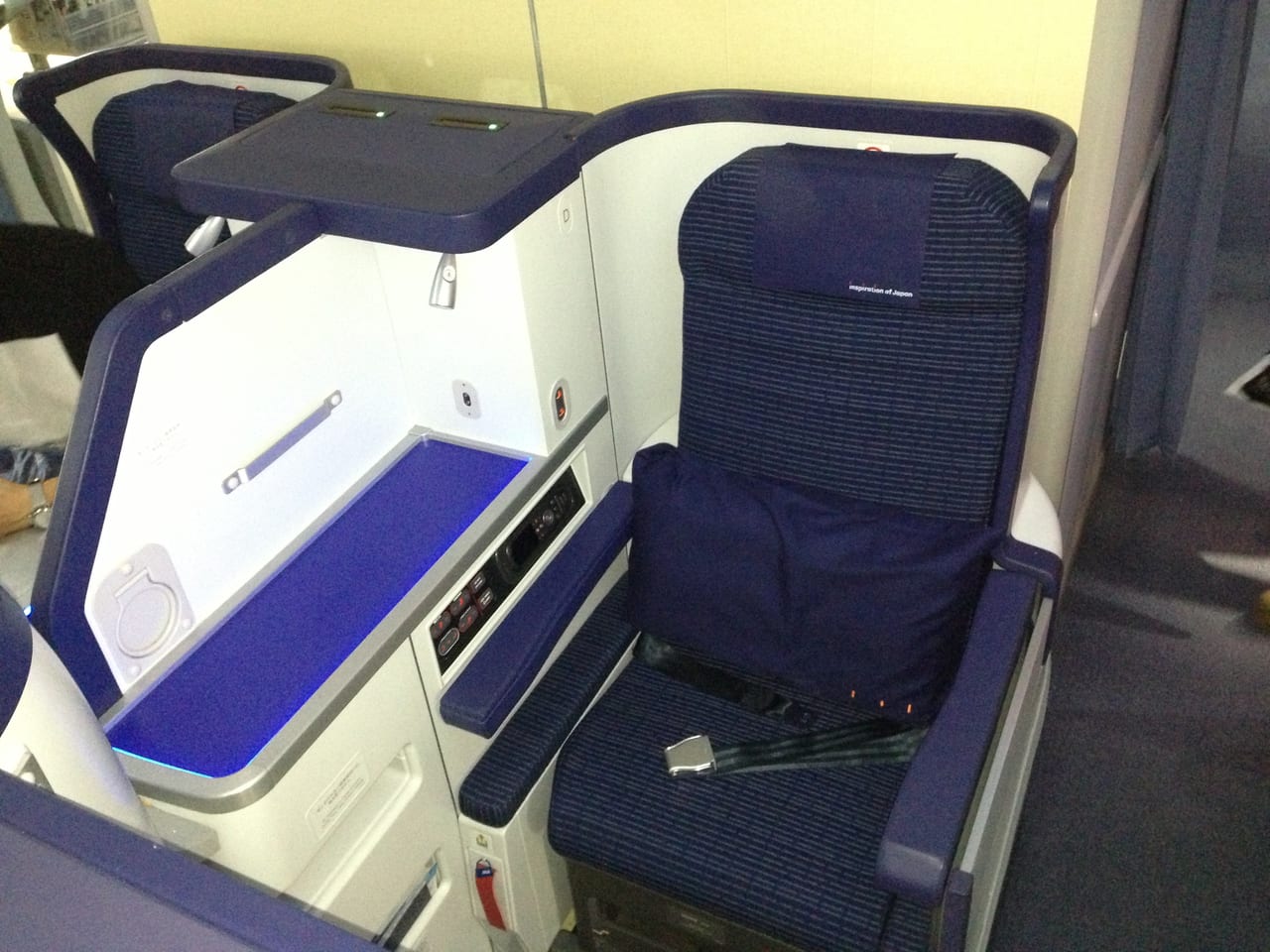
- The flights. ANA's "The Room" and JAL's Sky Suite are among the best business cabins flying, and both release solid award space — often for fewer points than comparable routes elsewhere.
- The hotels. From the Park Hyatt Kyoto to a $120 Hyatt Place, every tier is covered, so you can spend or save points to match your budget.
- Premium-cabin value. A $5,000+ business seat for ~60,000–90,000 points is a redemption worth prioritizing — see best business class under 60,000 points.
- Value vs. cash. Because domestic transport and mid-range hotels are affordable, your points stretch further — you're not forced to burn them on everything just to make the trip work.
The result: Japan rewards travelers who use points selectively, not indiscriminately.
Flying to Japan on points
Japan has several international gateways — Tokyo (Haneda/HND and Narita/NRT), Osaka (KIX), Nagoya (NGO), Sapporo (CTS), and Fukuoka (FUK) — with nonstops from many US cities. The best programs:

| Program | Books | ~Business | ~Economy | Transfer partners |
|---|---|---|---|---|
| Alaska Mileage Plan | JAL | ~60,000 | ~35–45k | Bilt, Marriott |
| ANA Mileage Club | ANA | ~75–88k RT | ~40–55k RT | Amex, Marriott |
| Aeroplan | ANA (fixed band); United dynamic | 85,000 on ANA | ~50–55k | Amex, Chase, Bilt, Cap One |
| Avianca LifeMiles | ANA, United | ~78k | ~45k | Amex, Citi, Cap One, Bilt |
| United MileagePlus | ANA, United | ~88k+ (dynamic) | ~40k+ | Chase, Bilt |
| Virgin Atlantic | ANA | ~90–95k RT | — | Amex, Chase, Citi, Cap One (via Virgin Red), Bilt |
For the full route-level breakdown — HND vs. NRT, seasonal pricing, and which program wins for your city — see New York to Tokyo on points from the East Coast or LAX to Tokyo on points from the West; between them they cover most US gateways. A few country-level notes:
- Book ANA and JAL through partner programs (Alaska for JAL, Aeroplan or LifeMiles for ANA) — usually cheaper than the airlines' own programs.
- SkyTeam works too but rarely wins. Flying Blue can book Delta (LAX–Haneda) or Korean via Seoul, but it's seldom the cheapest path to Japan — compare.
- Consider flying into Osaka (KIX). If Kyoto or western Japan is your focus, arriving at KIX saves a Shinkansen leg. More below.
Fund these through your Amex transfer partners or Chase, and watch for a transfer bonus once your space is confirmed.
Best hotel programs in Japan
All four majors are here — the question is which fits your city and budget. Figures are typical per night; confirm live (Marriott, Hilton, and IHG price dynamically).
- Hyatt — the best value per point. The Park Hyatt Kyoto, Andaz Tokyo, and Grand Hyatt Tokyo anchor the luxury end (Category 7–8, ~25,000–50,000 points against $600–$1,400 cash), while Hyatt Place/Centric cover mid-range. Its fixed award chart shines when cash rates spike in peak season.
- Marriott — the broadest luxury selection: the Ritz-Carlton Tokyo/Kyoto/Nikko, St. Regis Osaka, the Tokyo EDITION properties, and W Osaka, plus the 5th-night-free benefit. Dynamic pricing means peak-date awards can get expensive.
- Hilton — strong city coverage led by the Conrad Tokyo and Conrad Osaka, plus ROKU Kyoto (LXR). Easiest program to amass points in, which offsets its lower per-point value.
- IHG — an underrated luxury play: the new Six Senses Kyoto, ANA InterContinental Tokyo, and the well-located Kimpton Shinjuku Tokyo, down to budget-friendly Holiday Inns.
One Japan-specific truth: some of the country's best lodging — traditional ryokans with kaiseki dinners and onsen — aren't in any points program. Paying cash for a night or two of that experience is often money well spent, not a failure to optimize.
Tokyo vs. Kyoto vs. Osaka
Most first trips include at least two of these. How to choose:

| City | Vibe | Hotel availability | Best for | Ideal length |
|---|---|---|---|---|
| Tokyo | Electric mega-city, modern meets traditional | Excellent — all programs, all tiers | First-timers, food, shopping, energy | 3–5+ days |
| Kyoto | Temples, gardens, geisha districts, tradition | Limited chains; books up fast in peak | Culture, history, slower pace | 2–4 days |
| Osaka | Food capital, friendly and lively | Good; strong gateway (KIX) | Foodies, value, day trips to Nara/Himeji | 2–3 days |
The classic itinerary: fly into Tokyo, take the Shinkansen (~2h15m) to Kyoto/Osaka, and fly home from KIX — an open-jaw that avoids doubling back. Kyoto's limited chain-hotel inventory is the catch: award space (and cash rates) tighten sharply during cherry blossom and autumn, so book it first.
Cash vs. points
Japan is the destination where "always use points" breaks down — and that's a feature:
- Flights: usually points. Business class runs $5,000+ cash; ~60,000–90,000 points is excellent value. Premium cabins are where Japan points travel truly pays off.
- Hotels: often cash. Many excellent Japanese hotels are $150–$400 a night — at those rates, a 20,000–25,000-point redemption is poor value. Pay cash and save the points.
- Except luxury and peak dates: a $1,200 Park Hyatt Kyoto night for ~40,000 Hyatt points, or a peak cherry-blossom stay when cash rates triple, is exactly when hotel points shine.
Run the value each time — the framework in points vs. cash applies. The winning Japan strategy is usually points for flights + luxury, cash for mid-range — precisely the kind of split-decision a single-program search can't surface.
Best time to visit Japan
- Cherry blossom (late March–April) — the iconic season: stunning, and the most crowded and expensive. Book flights as soon as schedules open (typically ~11 months out — the window varies by program) and Kyoto hotels first; dynamic hotel awards spike hardest now.
- Autumn foliage (November) — arguably as beautiful and nearly as popular; book early.
- Summer (June–August) — hot and humid, with a rainy stretch in June, but lively festivals; shoulder weeks offer better value.
- Winter (December–February) — cold but crowd-free, with world-class skiing in Hokkaido/Niseko and the best hotel value and availability — except the New Year holiday, which spikes.
- Shoulder (May, early June, September–early October) — the quiet sweet spot: good weather, fewer crowds, easier bookings.
Common mistakes
- Booking too late for cherry blossom. Peak-season flights and Kyoto hotels sell out months ahead. Book close to the ~355-day airline window.
- Transferring points before confirming availability. Confirm the seat or room first — transfers are one-way and permanent.
- Ignoring nearby airports. Haneda beats Narita for central Tokyo; Osaka (KIX) beats both if you're headed west.
- Overlooking Osaka as an arrival airport. Flying into KIX and out of Tokyo (or vice versa) saves time and a backtrack.
- Overpaying for hotels at peak. Dynamic programs (Marriott, Hilton) spike during cherry blossom — lean on fixed-chart Hyatt or pay cash instead of burning inflated points.
- Assuming the JR Pass is always worth it. Since its price increase, individual Shinkansen tickets are often cheaper for a typical Tokyo–Kyoto–Osaka trip. Do the math.
How Beyond Points helps
Japan is the ideal case for comparing the whole trip at once. The best flights might be JAL through Alaska or ANA through Aeroplan; the best hotels might be Hyatt on points in Kyoto but cash for a mid-range Tokyo stay; and the smartest routing might be an open-jaw through Osaka. Checking airlines, four hotel programs, transfer partners, and cash rates individually is slow — and it's how travelers end up spending points where cash was better.
Beyond Points prices flights, hotel programs, transfer partners, and cash together, and recommends the strongest overall itinerary for your dates — not just each piece in isolation. For a country with as many good options as Japan, that whole-trip view is the difference between a good trip and an optimized one.
Conclusion
Japan offers some of the best opportunities anywhere to maximize both airline miles and hotel points — world-class business class, deep hotel coverage, and cheap, excellent transport. But the smartest Japan trip isn't "everything on points." It's points where they shine (premium flights, luxury and peak-season hotels) and cash where it wins (affordable mid-range stays, domestic transport). Plan the whole journey, book the scarce peak-season pieces early, and compare your options before you transfer.
Frequently asked questions
Can you travel Japan on points?
Yes. Business-class flights (from ~60,000 miles one-way) and hotels across Hyatt, Marriott, Hilton, and IHG are all bookable on points, and Japan's cheap domestic transport means points stretch far. The best plan often mixes points for flights and cash for affordable hotels.
How many points do you need for a trip to Japan?
Roughly 35,000–55,000 miles one-way for economy or 60,000–90,000 for business, plus 12,000–50,000 points per night for hotels depending on the program and property. Many mid-range hotels are cheap enough that cash beats points.
What's the best way to fly to Japan on points?
Book ANA through Aeroplan or Avianca LifeMiles, or JAL through Alaska Mileage Plan (~60,000 miles business) — usually cheaper than the airlines' own programs. See the LAX to Tokyo guide for route-level detail.
Which hotel program is best in Japan?
Hyatt offers the best value per point (Park Hyatt Kyoto, Andaz Tokyo), Marriott the widest luxury selection, Hilton the easiest points to earn, and IHG some standouts like Six Senses Kyoto. For affordable city hotels, paying cash is often smarter.
Should I visit Tokyo, Kyoto, or Osaka?
Ideally a combination: Tokyo for energy and food, Kyoto for temples and tradition, Osaka for food and as a western gateway. A common route flies into Tokyo and out of Osaka, connected by the Shinkansen.
When is the best time to visit Japan?
Cherry blossom (late March–April) and autumn foliage (November) are the most beautiful and most crowded. Winter (excluding New Year) and shoulder months offer better value and availability.