Travel guide · Best Time to Visit
Best Time to Visit Cancún: Weather, Crowds, Hurricanes, Seaweed, and Points Value by Season
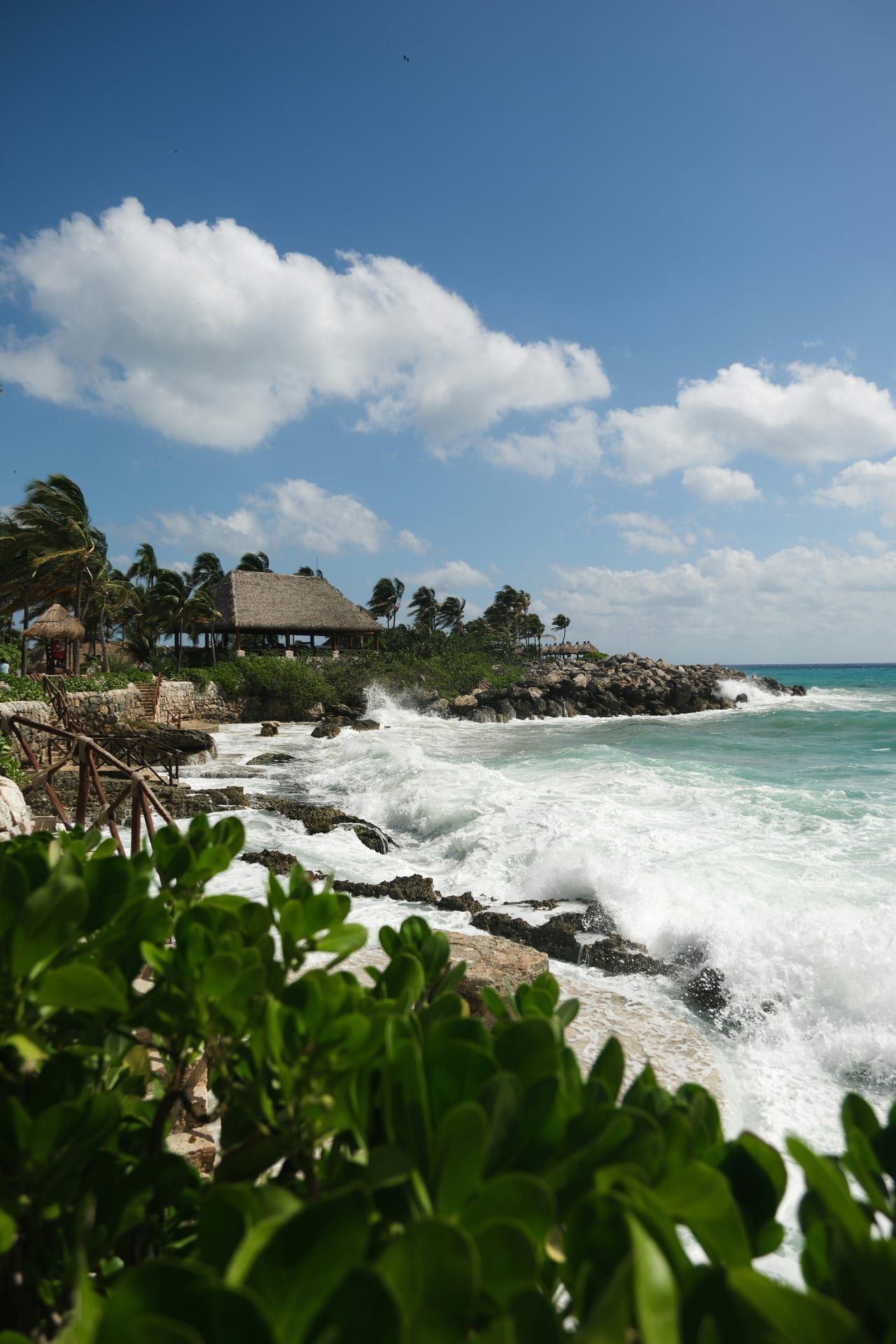
By The Beyond Points Team · Published 2026-08-01 · Last verified 2026-08-01
The short answer: Cancún is warm and swimmable year-round, so the real question is value, crowds, weather, and two local catches — hurricanes and seaweed. The sweet spot is November and early December (hurricane risk fading, holidays not yet spiking) and late April into May (after spring break): warm, drier, cheaper, with the best award availability. The priciest, busiest windows are the winter holidays, spring break (March), and Easter; the cheapest is September–October, the peak of hurricane season. For points travelers, timing mostly hits the hotel: dynamic programs surge at peak while a fixed-chart Hyatt award holds — the flight usually favors cash regardless, as Mexico on points explains.
Cancún month by month
Cancún has two loose seasons: a dry season (roughly December–April) — sunny, less humid, and peak for tourism — and a wet season (May–November) — hotter and more humid, with afternoon showers and, overlapping it, hurricane season. Two Caribbean-specific factors shape the trip beyond weather: sargassum (seaweed that washes onto east-facing beaches, worst in the warm months) and hurricane risk (June–November, peaking September). The table is a typical pattern — confirm current conditions before you book.
| Months | Weather | Crowds & price | Watch for | Points angle |
|---|---|---|---|---|
| Dec–Feb | Dry, sunny, warm (~80°F), low humidity | Peak — holidays priciest | Christmas/New Year spike | Dynamic hotels surge — Hyatt fixed chart or pay cash |
| March | Warm, dry, near-perfect | Peak — spring-break spike | Crowds, party scene; Easter near | Resort awards scarce — lock early |
| April–May | Hot, humidity building; mostly dry | Shoulder — easing after Easter | Sargassum starts on the beaches | Better value; check beach reports + award space |
| Jun–Aug | Hot, humid, afternoon showers | Family-summer peak; rates up | Hurricane season begins; sargassum; whale sharks | Book hotels early; compare a cash all-inclusive |
| Sep–Oct | Hottest, wettest | Low season — cheapest | Hurricane peak (September) | Cheapest awards and cash — but real storm risk |
| November | Drying out, warm, pleasant | Shoulder — best value | Hurricane risk fades; seaweed clears | Sweet spot: points hotels + cash flights |
The takeaway: the beach is warm all year, so let crowds, price, and the two catches drive the timing. The shoulder windows deliver near-peak weather without peak crowds, peak prices, or the worst of the seaweed.
The best months to aim for
- November–early December — arguably the best overall: hurricane risk has faded, the sea has cleared of most sargassum, the weather is drying out, and holiday prices haven't hit yet. The strongest mix of weather, value, and award space.
- Late April–May — after spring break and Easter, before the summer rains and the worst seaweed: warm, largely dry, and better value than the winter peak.
- December–February — the driest, sunniest weather, but the priciest (especially Christmas and New Year) and busiest; go for the guaranteed sun, not the value.
- September–October — the cheapest by far, but the peak of hurricane season; only with flexible, insured bookings.
What each season is good for
- Dry-season sun (December–April) — the most reliable beach weather and the classic Cancún postcard; also whale-free but reef-clear water for snorkeling Cozumel and the Mesoamerican reef.
- Whale sharks (roughly June–September) — the world's largest fish gather off Isla Mujeres and Isla Holbox; swim tours run in the warm months — a genuine reason to accept summer heat and rain.
- Ruins and cenotes (year-round, best in shoulder) — Chichén Itzá, Tulum, and the inland cenotes are more comfortable outside peak heat and crowds; the April–May and November shoulders are ideal.
- Fewest crowds, lowest prices (September–October) — the low season trades storm risk for the quietest, cheapest Cancún of the year.
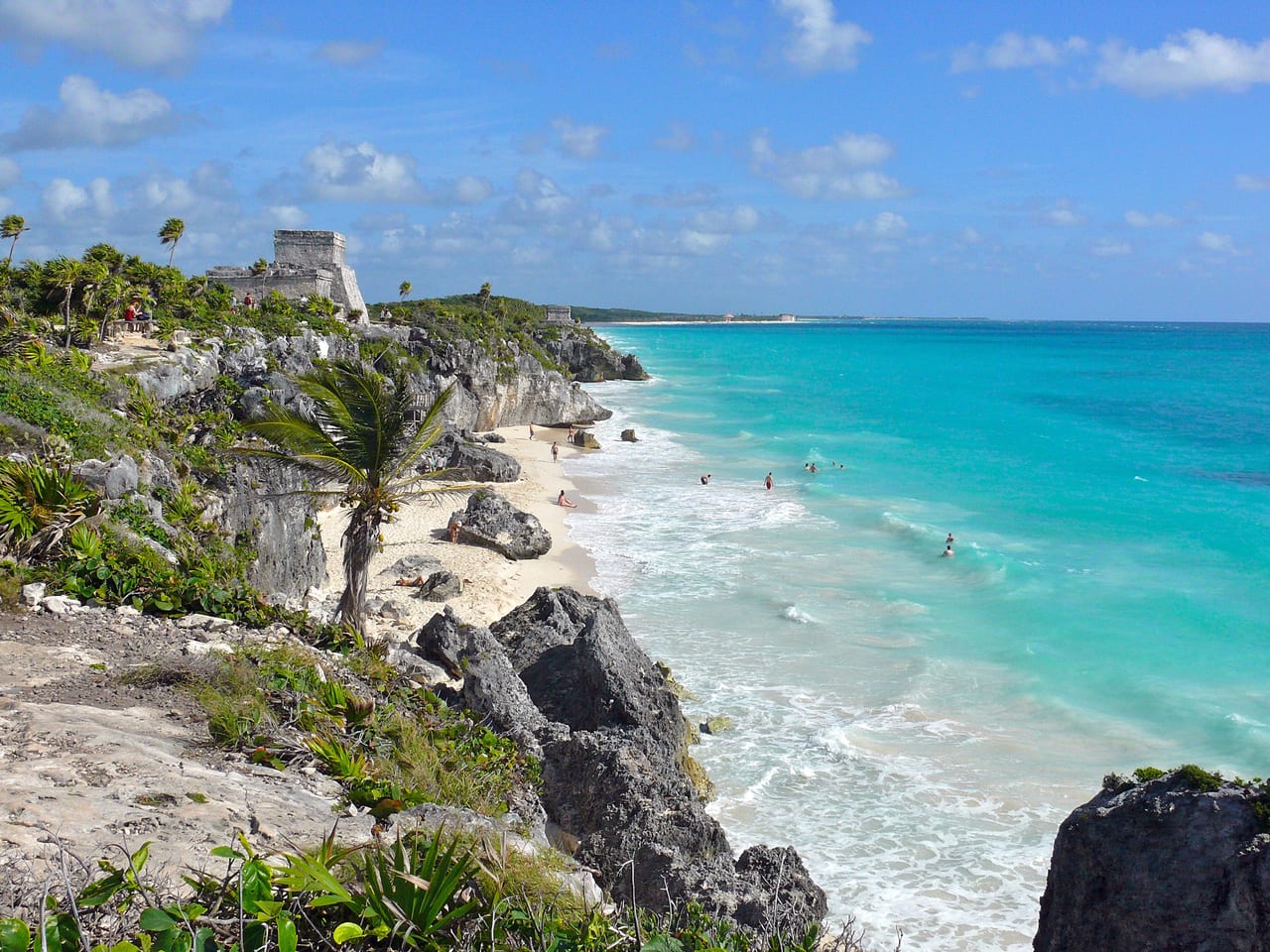

Sargassum matters if a pristine beach is the point of the trip: it hits the Caribbean-facing shores (Cancún, Playa del Carmen, Tulum) hardest from roughly April through August and clears by late autumn. If you're travelling in the seaweed months and want a flawless beach, Mexico's Pacific coast — Los Cabos, Puerto Vallarta — is essentially sargassum-free; the same cash-flight, points-hotel playbook in Mexico on points applies there too.
How the season changes booking on points
Cancún's season barely moves the flight math but strongly affects the hotel:
- Flights — Cancún is one of the cheapest, most competitive US routes, so cash beats miles in almost every season; peak weeks raise fares but rarely enough to flip the math. The exceptions are the winter holidays and spring break — see US to Cancún on points for the route detail, and American AAdvantage for the biggest network if you do redeem.
- Hotels — this is where the season bites. Dynamic programs (Marriott, Hilton) spike hard over Christmas/New Year, spring break, Easter, and the family-summer weeks, sometimes doubling a night's points. Fixed-chart Hyatt — the Ziva/Zilara all-inclusives — holds its price when others surge, the clearest peak-season shield (see World of Hyatt sweet spots).
Cash vs. points by season
- Flights: usually cash, in every season — Cancún fares are simply too low for miles to beat, outside the holiday and spring-break spikes.
- Hotels: usually points, and most valuable at peak when cash rates are highest — provided you use a fixed-chart or well-priced award rather than an inflated dynamic one. In the low season, when resort cash rates drop, always compare a cash all-inclusive package against the award.
Peak weeks are exactly when dynamic hotel points can quietly lose value — run the points vs. cash for hotels comparison before committing, and pay cash for the flight either way (points vs. cash for flights explains why).
Common mistakes
- Booking a beach trip in peak seaweed season without checking. Sargassum can blanket the sand from April to August; check recent beach reports, or pick a resort with active cleanup.
- Ignoring hurricane season. September–October is cheap for a reason; book flexible rates and consider travel insurance.
- Waiting to book holidays and spring break. Resort awards — and the odd cheap flight — sell out months ahead for Christmas, New Year, and March.
- Overpaying with dynamic hotel points at peak. When Marriott/Hilton surge over the holidays, a fixed-chart Hyatt night is often the smarter redemption.
- Transferring before confirming availability. Confirm the room and the seat first — transfers are one-way and permanent.
How Beyond Points helps
Cancún's timing question is really a value question, and it lands almost entirely on the hotel: whether a peak-week award still beats cash, whether a fixed-chart Hyatt undercuts a surging dynamic program, and whether shifting to a shoulder week opens award space (and clears the seaweed). Meanwhile the flight almost always favors cash.
Beyond Points weighs hotel award nights against cash rates and all-inclusive packages, and airline programs against live fares, for your exact Cancún dates — then recommends the season and the booking that give you the most trip for the least.
Conclusion
Cancún is warm year-round, so time your trip for value and for the two local catches: aim for November–early December or late April–May for the best mix of weather, price, thin crowds, and clear beaches; take December–February for guaranteed sun at peak prices; and consider September–October only if you'll trade real hurricane risk for the year's lowest rates. Put points where hotel cash rates are highest — favoring fixed-chart Hyatt at peak — pay cash for the cheap flight, and confirm space before you transfer. Time it well and the Caribbean's most famous beach is both a dream and a bargain.
Frequently asked questions
What is the best time to visit Cancún?
For the best mix of weather, value, and manageable crowds, aim for November to early December or late April into May. The weather is warm and largely dry, prices are lower than the winter peak, the beaches are clearer of seaweed, and hotel award availability is much better.
When is the cheapest time to visit Cancún?
September and October are the cheapest by far — but they're the peak of hurricane season, so book flexible rates and consider travel insurance. Early November and late spring (after Easter) offer strong value with much lower storm risk.
When is hurricane season in Cancún?
The Atlantic hurricane season runs June 1 to November 30, with the highest risk from August through October and a peak around September. Direct hits on Cancún are relatively infrequent, but storms and heavy rain are possible, so build in flexibility if you travel then.
When is the seaweed (sargassum) worst in Cancún?
Sargassum typically affects Cancún and the Riviera Maya's Caribbean-facing beaches most heavily from around April through August, though it varies year to year. If a pristine beach is essential in those months, check recent reports or consider Mexico's Pacific coast (Los Cabos, Puerto Vallarta), which is essentially sargassum-free.
Does the season change how many points a Cancún trip costs?
Mostly on the hotel side. Dynamic programs (Marriott, Hilton) spike over the holidays, spring break, and summer, sometimes doubling a night's points, while fixed-chart Hyatt holds steady. Flights are usually better on cash than points regardless of season, because Cancún fares are so competitive.
Is it worth visiting Cancún in summer?
Yes, with caveats. Summer is hot, humid, and rainy with hurricane and sargassum risk, but it's also whale-shark season off Isla Mujeres and family-friendly. Book hotels early (it's a peak family window), compare a cash all-inclusive package against an award, and stay flexible on dates.